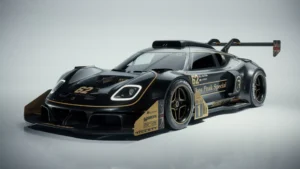
The story of the automobile is, in many ways, the story of human ambition. What began as a noisy contraption of gears, metal, and smoke has transformed into a sleek, intelligent machine that connects us to the world. The “Wheels of Tomorrow” are not just about getting from one place to another—they symbolize innovation, sustainability, and the boundless pursuit of progress. From steam-powered beginnings to the era of self-driving electric marvels, the evolution of modern motoring reflects how technology has reshaped not just our roads, but our entire way of life.
1. The Dawn of Motion: From Steam to Combustion
The earliest attempts at self-propelled vehicles date back to the 18th century, when inventors like Nicolas-Joseph Cugnot experimented with steam engines to move heavy wagons. These early machines were crude and impractical, often bulky and difficult to steer. However, they set the stage for something revolutionary—mobility without horses.
The 19th century saw a shift from steam to internal combustion engines. Karl Benz, Gottlieb Daimler, and Wilhelm Maybach are often credited with perfecting this technology in the late 1800s. Benz’s 1886 Motorwagen is widely regarded as the first true automobile—a lightweight, gasoline-powered tricycle capable of modest speeds. While primitive by today’s standards, it marked the birth of motoring as we know it.
As engines improved, so did reliability and speed. Early 20th-century automobiles like the Ford Model T brought cars to the masses, transforming them from luxury curiosities into essential tools for modern living. Henry Ford’s assembly line revolutionized production, lowering costs and changing how industries around the world manufactured goods.
2. The Age of Expansion: Cars for the People
By the mid-20th century, cars were no longer a novelty—they were a cultural phenomenon. Roads stretched farther, and cities grew around them. Automobiles became symbols of freedom, independence, and social status. The roar of an engine meant power, progress, and adventure.
The 1950s and 1960s were decades of style and speed. Sleek chrome designs, muscle cars, and luxury sedans dominated the landscape. Brands like Chevrolet, Mercedes-Benz, and Ferrari became global icons. Meanwhile, Japanese manufacturers such as Toyota and Honda began developing efficient, reliable models that would soon challenge Western dominance.
Motoring wasn’t just about transportation anymore; it was about identity. The car you drove said something about who you were—your taste, your success, your aspirations. Movies, advertisements, and pop culture celebrated the open road, from Easy Rider to The Italian Job.
Yet, beneath the glamour, a storm was brewing. The oil crises of the 1970s forced societies to rethink their reliance on fossil fuels. Rising fuel prices and environmental awareness began reshaping how automakers approached design and engineering. The world was awakening to the cost of convenience.
3. Efficiency and Innovation: The Rise of Technology
The late 20th century introduced a new chapter—one defined by technology and efficiency. Engineers began experimenting with lighter materials, aerodynamic designs, and advanced fuel systems. Fuel injection replaced carburetors, turbochargers enhanced performance, and safety innovations like airbags and anti-lock braking systems became standard.
In parallel, environmental concerns gave rise to the first hybrid and electric prototypes. Toyota’s launch of the Prius in 1997 marked a turning point, proving that hybrid technology could be practical and desirable. The car industry began embracing sustainability—not just as a moral imperative, but as a competitive advantage.
Computerization also transformed the driving experience. Electronic control units (ECUs) started managing everything from engine timing to suspension settings. The once purely mechanical machine was becoming a digital one, setting the foundation for the smart cars of today.
4. The Electric Revolution: Power Without Pollution
Few shifts in motoring history have been as transformative as the rise of electric vehicles (EVs). Though electric cars existed as early as the late 1800s, they were overshadowed by gasoline engines—until the 21st century revived them in spectacular fashion.
Tesla, under the leadership of Elon Musk, disrupted the automotive world by proving that EVs could be fast, luxurious, and desirable. With sleek designs and cutting-edge battery technology, Tesla redefined what a modern car could be. Other manufacturers quickly followed suit—Nissan with the Leaf, Chevrolet with the Bolt, and luxury brands like Porsche and BMW with high-performance electric models.
The heart of the revolution lies in battery innovation. Lithium-ion technology has advanced rapidly, offering longer ranges, faster charging, and greater efficiency. Governments around the world are now investing heavily in charging infrastructure and offering incentives for EV adoption. Countries like Norway and the Netherlands are even planning to ban new internal combustion engine (ICE) car sales within the next decade.
Electric cars are more than a technological upgrade—they represent a philosophical shift. They embody cleaner cities, reduced emissions, and a commitment to sustainability. The “wheels of tomorrow” are whisper-quiet, emission-free, and powered by renewable energy.
5. Smart Mobility: When Cars Learn to Think
As the automobile has evolved, it has grown smarter. Artificial intelligence and advanced sensors are transforming how we interact with vehicles. The once passive driver is now part of a dynamic system of algorithms, radar, cameras, and connectivity.
Autonomous vehicles—self-driving cars—are no longer science fiction. Companies like Waymo, Tesla, and Uber are investing billions into developing fully autonomous systems capable of navigating complex environments. These cars can detect obstacles, interpret traffic signs, and make split-second decisions faster than any human driver.
Connectivity is another major leap. Modern cars are now digital hubs, seamlessly linking to smartphones, cloud servers, and smart city infrastructure. Features like predictive maintenance alerts, real-time traffic updates, and over-the-air software upgrades are redefining convenience. With 5G technology, cars are evolving into nodes in a larger network—a web of information and automation that enhances safety and efficiency.
However, this evolution also raises new challenges. Data privacy, cybersecurity, and ethical concerns about AI decision-making are at the forefront of automotive innovation. The future of motoring will depend not only on engineering prowess but also on responsible technology governance.
6. Redefining Design: Form, Function, and Emotion
The vehicles of tomorrow are not just smart—they’re beautifully designed. The fusion of art and engineering has never been more seamless. Modern designers are reimagining interiors as serene, tech-integrated spaces rather than mere cabins. Touchscreens, haptic feedback, and augmented reality dashboards replace traditional dials and switches.
Sustainability is now central to design philosophy. Recycled materials, vegan leather, and renewable components are becoming standard. Aerodynamics are optimized using artificial intelligence, minimizing drag and maximizing range. Even the way cars are manufactured is changing—robotic assembly lines and 3D printing allow for precision, customization, and reduced waste.
Concept cars from major automakers hint at an aesthetic future that’s minimalist yet expressive—vehicles that look alive, capable of adapting their lighting, color, or even shape to their environment. The car is no longer just a machine; it’s a personalized experience, blending emotion with innovation.
7. The Green Road Ahead: Sustainability and Beyond
The future of motoring will be defined by our commitment to sustainability. Electric vehicles are only the beginning. Hydrogen fuel cells, solar-powered systems, and synthetic fuels are emerging as complementary technologies that could redefine energy use.
Manufacturers are working to achieve carbon neutrality throughout the entire production cycle—from raw material sourcing to recycling. Circular economy principles are being applied to ensure that vehicles of the future generate minimal waste. Some companies are even exploring car-sharing ecosystems that reduce the need for private ownership, promoting shared mobility instead.
Urban planning is also adapting. Smart cities are integrating autonomous shuttles, e-bikes, and on-demand ride services to reduce congestion and emissions. Roads themselves may evolve—embedded with inductive charging systems or sensors that communicate directly with vehicles. The infrastructure of tomorrow will be as intelligent as the cars that drive on it.
8. Challenges on the Horizon
Despite remarkable progress, the road ahead is not without obstacles. The transition to electric and autonomous vehicles demands massive investment in infrastructure, energy production, and cybersecurity. Battery disposal and raw material extraction remain environmental concerns that must be addressed responsibly.
Moreover, the human factor—trust—remains crucial. Many drivers are still skeptical of self-driving technology or fear the loss of control in fully automated systems. Regulators, manufacturers, and technologists must work hand in hand to ensure that safety and transparency remain top priorities.
Economic challenges also loom. As traditional car industries transform, millions of workers will need retraining for jobs in robotics, software, and renewable energy sectors. The “wheels of tomorrow” must roll forward inclusively, ensuring that progress benefits everyone, not just the privileged few.
9. Conclusion: The Journey Ahead
The evolution of modern motoring is far from over—it’s accelerating. From steam carriages to self-driving EVs, the automobile has always mirrored humanity’s creative spirit. Each generation of innovation has brought new freedom, new challenges, and new dreams.
The “Wheels of Tomorrow” are not merely vehicles—they’re visions of a cleaner, smarter, and more connected world. They represent our desire to move forward, not just physically, but ethically and technologically. In the near future, cars may drive themselves, communicate with cities, and run on pure renewable energy—but they will still serve the same timeless purpose: to take us places, to explore, and to evolve.
As we stand at the crossroads of technology and sustainability, one thing is certain: the road ahead is electrifying, and the journey has only just begun.